Why do glasses become cloudy?
Cloudy streaks can be caused by three things: limescale deposits, drying spots or glass corrosion. Limescale forms as a result of hard water, a lack of regeneration salt or an incorrectly set or poorly functioning regeneration unit in the dishwasher.
Drying spots on glasses are caused by improper loading or not enough rinse aid. Glass corrosion, on the other hand, is a permanent deterioration of the surface of the glass. It occurs when glassware is cleaned at too high a temperature or with too much dishwasher detergent. It is easy to tell these effects apart: limescale and drying spots can be removed with vinegar, corrosion can’t.
How can you prevent limescale in the dishwasher?
It all depends on how hard the water is. The harder the water, the more limescale there will be. For this reason, the softening unit in the dishwasher needs to be configured correctly. Rinse aid and regeneration salt are not marketing gimmicks, but absolute essentials. They ensure limescale is flushed out with the drainage water, preventing it from depositing on glassware.
Which dishwasher program is ideal for glasses?
A special glassware or gentle program at a low temperature (40–50°C) with adjusted water pressure is recommended. Modern, high-quality SIBIR dishwashers feature sensors that detect the water hardness, load level and the amount of dirt and automatically select the right combination of temperature, time and detergent amount.

With the right settings, can any glass go in the dishwasher?
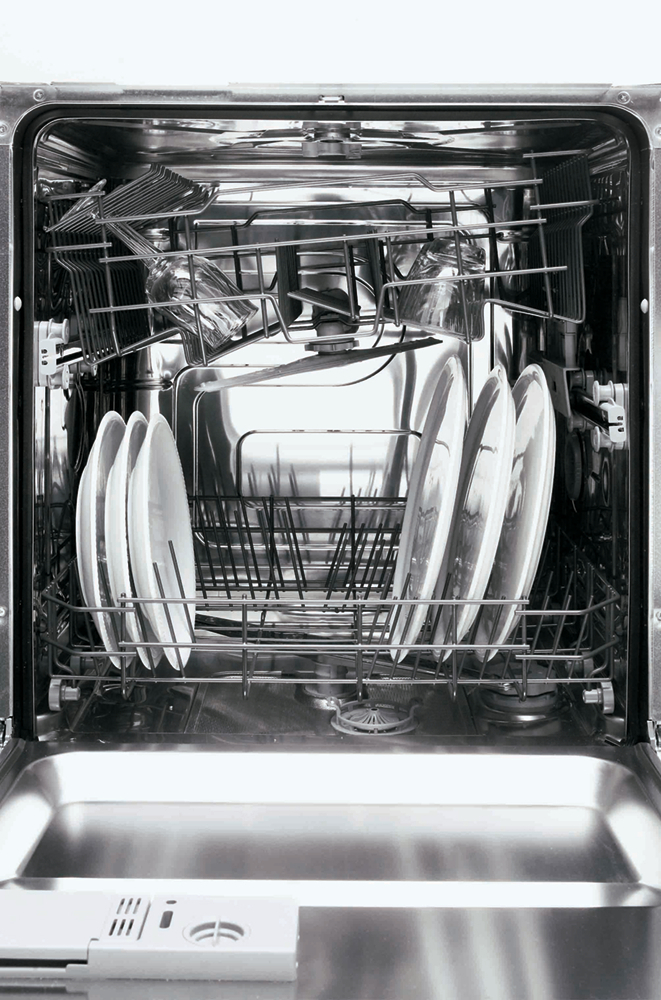
Not necessarily. Thin crystal glass or handmade glassware are best suited to cleaning by hand. They respond sensitively to temperature fluctuations and aggressive cleaning agents. Dishwasher-safe glasses are usually labelled as such. In the case of elegant wine glasses: it is better to place them upright than tilted at an angle, as this can cause pressure points and breakages. Brilliant results therefore require consideration of both sides: the appliance technology and the glassware. With the right settings, glasses will come out of the dishwasher sparkling.
Should glasses be removed from the appliance straight after dishwashing?
Yes, right after the program ends if possible. If glasses are left in the warm and humid interior of the dishwasher for too long, condensation can form and leave unpleasant marks. Especially with sensitive glassware, standing moisture can even lead to small stress cracks. To play it safe, it’s best to give the wine glasses a quick drying-off with a soft microfibre cloth.
Dishwasher tabs, powder or gel? What is best for glasses?
Powder is often the gentler option. It can be dosed and has a more even effect, while tabs tend to degrease better and therefore result in greater wear on the surface of the glassware. Liquid gels are convenient, but they often contain enzymes and surfactants that can be tough on glassware. Anyone who regularly cleans glasses in the dishwasher should consider using special glass-cleaning tabs or powder.

Can glassware be cleaned in the dishwasher without rinse aid?
Technically, yes – but the resulting finish will be disappointing. Without rinse aid, water marks and streaks are often left on the glass, especially if the water is hard. Rinse aid helps the water run off faster, allowing glassware to dry streak-free. People sensitive to fragrances can use odourless products or environmentally friendly alternatives. Important: never use vinegar as a regular substitute because it can damage the seals.
What can be done about glasses that become cloudy after dishwashing?
If the glasses are only cloudy, a simple trick can help: soak them in warm water with a little vinegar or citric acid, then rinse off with clean water and polish dry. If the surface is permanently matt, it is unfortunately too late for polishing; the glass is corroded. In other words: the glasses will never sparkle again. In future, make sure to choose a low-temperature dishwasher program, use a mild detergent and dry them gently.
How can this kind of damage be prevented?
Regularly top up rinse aid and regeneration salt, adjust the water hardness and choose the right program. To play it even safer, you can clean valuable glasses separately in a glassware program or by hand. Briefly, but thoroughly. Proper glassware care in the dishwasher means using rinse aid, regeneration salt and the right program.
What if the dishwasher and glasses smell stuffy?
A clean appliance is half the battle. Deposits in the sieve, spray arm and seals can impair the dishwasher program. Once per month, run the dishwasher empty at a high temperature with some cleaning agent or a little citric acid. This will remove any grease and biofilm in the appliance. Afterwards, your glasses will be odour-free again.
Summary
A dishwasher can keep glassware clean, but only if it is used correctly. Temperature, water hardness and detergent are key considerations for sparkling results without cloudy streaks. The right combination keeps glasses looking clean and clear – just the way they should be. Another SIBIR tip: a squirt of household vinegar in the bottom basket can do wonders in the case of hard water. However, only use a small amount to protect the seals and metal parts.